


Select a product to start your order.
Product description
Complete test kit for surfaces, rinse water, and products. Detection from 0,1 ppm whey (not cheese).
For surfaces, rinse water and product analysis, swabs included
Price per piece, available per 5 pieces or multiples of 5.
Content
- test strip
- Swab
- Extraction tube (transparent cap)
- Reaction tube (blue cap)
- Bottle with extraction buffer
- Cover it up
- Large pipette
- Pipette small (0,3 ml)
- Cardboard holders
- QR code for use with the Reader (Optional)
Detection limit
Product: 0,1 ppm β-lactoglobulin
Swab/environmental examination: 0,02 µg/swab β-lactoglobulin
Rinsing water: 0,03 mg/l β-lactoglobulin
β-lactoglobulin (BLG) is a specific milk protein. Approx. 10% of the proteins in fluid milk consist of BLG and 80% of casein. BLG is the main milk protein in whey products, but is virtually absent in cheese.
The test focuses on BLG from cow's milk, but also detects proteins from goat's and sheep's milk to a lesser extent.
Sensitivity depends on the type of food, the amount of product under investigation and the extraction method. Contact us to determine the detection limit in a specific product.
Operating principle
Using specific antibodies (just like with ELISA tests), the presence of the allergen to be tested is made visible by the appearance of a line. The test strip contains 2 lines: a control line that indicates whether the test has been performed correctly and a test line. Higher concentrations (10 ppm β-lactoglobulin) of the allergen in the sample may suppress the visibility of the test line. Therefore, do not use the test for pure (undiluted) whey ingredients.
The principle is comparable to a corona or pregnancy test.
To use for
> Securing the chain and checking suppliers
> Control raw materials
> Determine and verify cross-contamination
> Control cleaning
> Handling rework
> Test end products
> Check rinse water
Additional information
This kit is particularly suitable for detecting cross-contamination with whey products, but not with cheese and yoghurt caseinates. Then use the casein rapid test of milk total when the precise milk ingredient is unknown.
During product analysis, it is important that the test strip does not become blocked by product residues or thickeners. If the liquid cannot flow properly through the strip, it will not reach the C-line, resulting in an invalid result. Therefore, allow solid product residues to settle thoroughly before testing. For products containing thickeners or that are highly viscous, it may be necessary to dilute the sample with water beforehand. Please note that dilution affects the detection limit.
In the analysis of products with a high content of polyphenols, such as pure spices, cocoa (powder), nuts, seeds, or berries, the use of a special extraction additive necessary. The additive prevents false-positive test results by binding polyphenols.
For both product and rinse water analyses, the pH of the sample must be between 6 and 8. Abnormal results may occur outside this pH range. At a low pH, there is a risk of a false-positive result.
A buffer solution is supplied with the test to stabilize the pH and salt concentration. The amount of buffer is matched to the prescribed sample quantity. It is therefore essential to accurately weigh the sample during product analysis, for example with the precision balance.
Contact us for more information about customized extraction protocols, for example for strongly colored foods.
It is recommended to validate the method by using both a negative and positive monster to analyze the product to be investigated. Dilute the positive sample to the desired measurement range.
Simple working method

Store 2 – 8°C
Shelf life approx. 12 months (min. 3 months upon delivery)
Quantify results with reader (optional)
The strips can be easily visually assessed. No additional equipment is required. This determines whether the allergen is detectable or not.
Optionally, the strips can also be read with the separately available readerThis reader measures the intensity of the lines on the strip and calculates the allergen content in ppm (parts per million or mg per kg) based on that information. This method is similar to an ELISA analysis, but faster and more user-friendly. Accredited external analyses may still be necessary, but the reader saves time and money by performing the measurements yourself.
The reading with the reader gives the following values:
| Concentration in product | Result reader |
|---|---|
| Less than 0,1 ppm | "<100 ppb" (= <0,1 ppm) |
| 0,1 - 1,5 ppm | Exact value 100 - 1500 ppb (= 01 - 1,5 ppm) |
| More than 1,5 ppm | ">1500 ppb" (= >1,5 ppm) |
At higher concentrations, the intensity of the test line is suppressed. This can result in a reading that is too low. In that case, use a dilution of the extract. Dilutions are made with the extraction buffer included in the kit. The dilution procedure can be found in the included manual. Example: When the concentration is higher than 1,5 ppm, a 1:10 dilution can be made. This extends the measuring range by a factor of 10 to 1-15 ppm (or even higher with additional dilutions).
Important: PPM values (mg/kg product) are only relevant when using strips for product testing. We do not recommend using the reader for swabs (surface tests) and rinse water. With swabs, cm² is sampled, and rinse water is not consumed. Therefore, the amount of allergen on a surface or in rinse water cannot be expressed in mg/kg product. Therefore, the values read cannot be compared with product standards.
Quantitative results are interesting for:
- PAL Decision Making: Meet the legal requirements in the Netherlands from 1-1-2026
- Vegan products: Monitor maximum cross-contamination levels of animal ingredients, such as for example milk or egg
More information about the SENSIStrip rapid test
SENSIStrip is a trademark of Gold Standard Diagnostics Budapest Kft.
Total products
€ 0,00
Shipping
€ 0,00
Total
€ 0,00


Download overview and
rapid test selection aid


rapid test selection aid
Years of experience
Practical advice
Delivery on invoice
Ordered before 12 noon
delivered next working day
Free delivery from € 350
Recommended
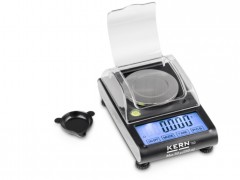
Digital precision scale
Precision scale 0,001 g for precise weighing of samples for allergen rapid tests.
€ 69,00
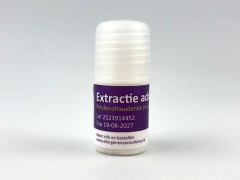
Extraction additive
Extraction additive for polyphenol-containing products, prevents false-positive rapid test results.
€ 15,95